
AI Writer Check
Look closer at text that sounds like ChatGPT
If a paragraph feels familiar, an AI check can help you examine its style. It cannot tell you which model wrote it. Use the free check as one part of a careful review, not as a definitive ChatGPT label.
Why ChatGPT-like wording is not a fingerprint
Balanced introductions, tidy lists and repeated concluding phrases are common in AI-assisted drafts. They also appear in school essays, business templates and ordinary human writing. Models produce different styles depending on prompts, context and editing. No single phrase establishes that a passage came from ChatGPT.
AI Writer Check looks for writing patterns rather than a verified record of how a document was created. Its estimate cannot distinguish reliably between every model, identify a prompt or recover a conversation. Treat any model-specific interpretation as a question to investigate, not a finding.
Review the argument, sources and process
Paste a short, representative passage and read the explanation. Then look at the whole document. Does it answer the question? Are the examples relevant? Can you trace quotations and references to real sources? These checks matter whether the first draft came from a person, an assistant or a combination of both.
When authorship affects grading or employment, review the available process evidence. Drafts, version history, notes and a conversation with the author can add context a detector does not have. A sudden change in style is worth discussing, but it can also reflect revision, coaching or a new subject.
If you used ChatGPT in your own draft
Read every paragraph as an editor. Replace generic examples with observations you can stand behind. Cut claims that lack support. Restore your normal vocabulary and choose a structure that fits your audience. A humanizer may offer wording options, but it should not replace your judgement or introduce facts you cannot verify.
Follow the rules that apply to your task. Some courses permit brainstorming but not generated prose; some workplaces require disclosure. Editing does not remove those obligations. Rechecking can help you inspect style changes, but no tool can promise an undetectable result. Aim for transparent, accurate writing that you understand and can explain.
A ChatGPT checker cannot reconstruct the process
ChatGPT checker describes a common search need, not a forensic capability. Text does not normally contain a readable record of the model, prompt or conversation behind a draft. Someone may have used an assistant for an outline, translated a sentence or rewritten the whole document. Those are different activities. A style estimate cannot establish which occurred, when it happened or whether it was allowed. It cannot recover the original prompt or identify the person who entered it.
Consider a paragraph that defines a topic, lists benefits and ends with a balanced conclusion. It resembles many generated answers, but also an ordinary textbook structure. Ask what it contributes to this specific document. Does it explain a relevant example or connect evidence to the argument? If not, strengthen the substance rather than claiming to recognise a model. A familiar structure can be useful; the issue is whether it serves the reader and says something supported.
When someone discloses ChatGPT use, ask about scope. Which parts were generated? Which claims were verified? What did the author change? These questions clarify responsibilities and reveal where more work is needed. If rules require disclosure, editing does not remove that obligation. If assistance is permitted, AI-like wording is not automatically a violation. Apply the actual policy consistently rather than inventing a new rule after seeing a score. Review the process evidence together with the person’s explanation.
For your own draft, retain sources and notes supporting the argument. Read without looking at the score and mark statements you could not explain to another person. Verify them, remove unsupported material and add your own relevant details. Then inspect remaining style patterns. A rewrite may change the estimate but cannot certify originality or erase disclosure requirements. The useful outcome is a document you understand and can stand behind, with clear sources and an honest account of assistance when required.
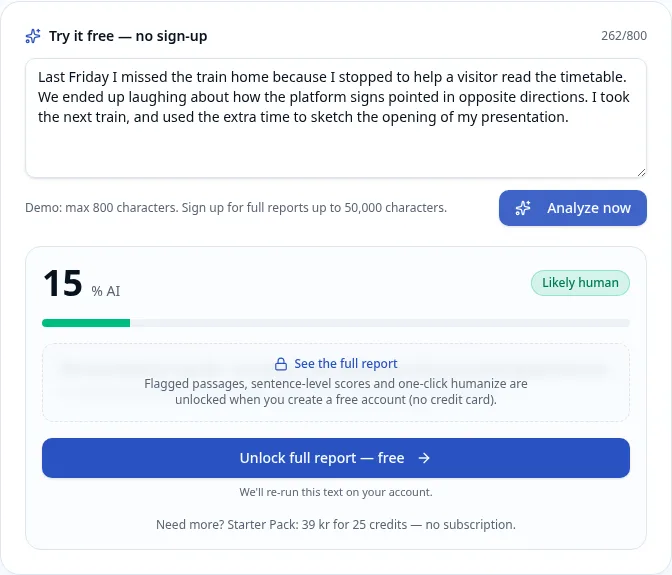
A real short-check result. This example is not an accuracy test.