
AI Writer Check
Understand the AI signals in your text
A polished paragraph can leave you wondering who wrote it. An AI detector gives you a starting point for review, not a verdict. Try a short text without signing up, then read the explanation before deciding what to do next.
What an AI detector can tell you
AI Writer Check examines patterns associated with AI-assisted writing. These can include predictable phrasing, repeated transitions and unusually uniform sentence structures. The short check returns an estimate and explanation. The full report adds flagged passages so you can inspect the original wording in context.
A signal is not the same as evidence of misconduct. A person following a template can write very regular prose. An AI-assisted draft can include original research, personal experience and substantial human editing. Neither case fits a simple yes-or-no judgement.
A practical review process
Start with the text you actually need to review. Remove personal details and confidential material unless you have permission to submit them. Paste a representative passage into the free check. Read the explanation rather than focusing only on the number, and compare the flagged style with the surrounding document.
Next, check claims against sources. Ask for drafts or notes when authorship matters. Look for a consistent argument and specific examples the author can explain. In education and hiring, give the person an opportunity to discuss their process before drawing a conclusion.
Improve a draft without chasing a score
If you are the writer, use the signals to spot generic sections. Replace broad claims with your own examples. Remove repeated introductions, clarify vague conclusions and vary sentence length where it helps the reader. The humanizer can suggest alternatives, but you remain responsible for accuracy and meaning.
Rechecking a draft may reveal changed patterns. It cannot certify that a text is human-written or guarantee how another detector will respond. The useful outcome is a clearer piece of writing and a better-informed conversation, not a badge of certainty. For classroom-specific advice, read the guide for teachers before using any result in an assessment.
Interpret an AI detector score in context
A score is a review aid, not a calibrated probability that a named person cheated. Do not convert it into the percentage of words written by a model. Different excerpts can receive different estimates because topic, vocabulary and context change. Quotations and standard definitions need special care: check who actually wrote a highlighted sentence before asking the author to explain it. A familiar phrase may be required by a brief or copied from an appropriately cited source.
Imagine an introduction that could describe almost any organisation. The checker highlights regular sentences and broad claims. Ask which organisation, decision and example the paragraph refers to. That question improves the text regardless of its origin. The paragraph could have come from an assistant, a template or a cautious writer. Keep those alternatives open. A useful review identifies what needs explanation rather than assuming the drafting process from the final wording.
If two checks disagree, do not average their numbers and call that the truth. Compare explanations with the original passage and investigate what you can verify: references, drafts, notes and examples the author understands. Sometimes authorship remains uncertain. You can still improve vague writing without settling who drafted it. Document what the review actually established, not what you hoped the score would establish. Avoid forwarding reports as accusations to people who do not need them.
Keep the task and its consequences in mind. Reviewing a marketing draft calls for clear claims and a useful next step. Reviewing an assignment requires a fair process and attention to learning. Reviewing an application should focus on relevant experience. No detector threshold replaces those responsibilities. Read the original first, use the explanation to choose questions, and return to the original when making your decision. The tool provides one perspective; your review supplies the context it cannot see.
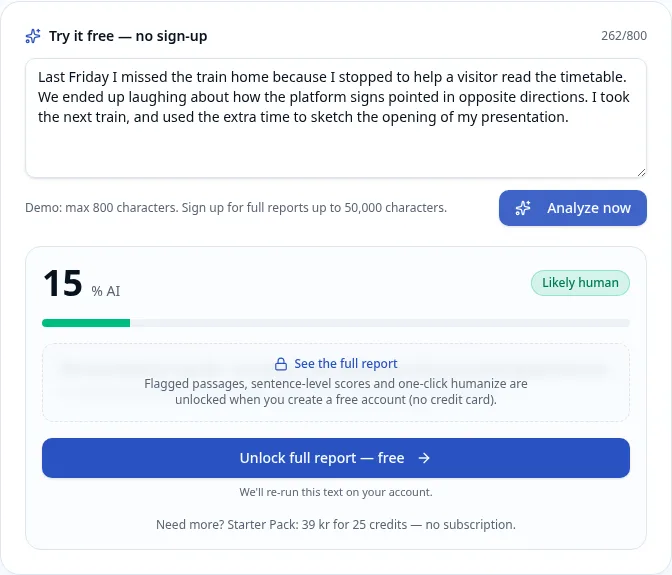
A real short-check result. This example is not an accuracy test.